Image Map
Showing posts with label centers. Show all posts

9 Ways to Make Your Reading Buddies Program More Effective

Do you want to implement a Reading Buddies program in your elementary school? Check out these must read tips to ensure a successful and effective buddy reading program with your students! #thereadingroundup #buddyreading


Reading Buddies is a popular program in elementary schools that promotes literacy. Many students have greatly benefited from buddy reading over the years. If you're considering implementing this at your school, you'll want to check out these must read tips to ensure a highly effective program for all of your students!


This is Part 2 of my Reading Buddies series. Don't miss Part 1 where I explained the program and the benefits of it!

TIPS FOR IMPLEMENTING READING BUDDIES


Assign Buddies

If your entire school is on board, it is recommended to pair up a lower grade with an older grade with specific teachers being assigned to each other. Ideal pairings would be: Kindergarten with 3rd, 1st with 4th, and 2nd with 5th. These pairings should remain in place for the entire year, which allows students to build solid relationships. If your entire school isn't on board, you can still pair up teachers that will remain consistent all year.

After the classes are assigned to each other, it's time to pair up students. Students should have the same buddy all year. Obviously, things happen with students being sick, moving in/out, etc., but remaining as consistent as possible helps with the success of the buddies.

Things to consider when pairing up students
The two teachers should briefly meet to discuss students' personalities and ability levels to create ideal pairs. If you have a 2nd grader who is reading significantly above grade level, you obviously wouldn't want to pair him/her with a 5th grader reading below grade level. This defeats the purpose of the program for both students. Personalities should also be considered for effective pairs. Two students who lack focus would not be an ideal match. You may also want to administer interest surveys and pair students by their shared interests. This immediately creates a natural connection with students that helps build a better relationship between them. (Find out more about administering reading interest surveys).

Do you want to implement a Reading Buddies program in your elementary school? Check out these must read tips to ensure a successful and effective buddy reading program with your students! #thereadingroundup #buddyreading
Teacher form to document buddy reading pairs.


Schedule a Set Time

In order to make reading buddies a priority it helps to schedule a consistent time each week to meet. Teachers have busy schedules but if you know that on a certain day of the week you have reading buddies for 15-30 minutes, you're more likely to stick to it. You'll soon find that students look forward to those days!

Find a Place to Meet

Decide on a quiet place to meet with plenty of space for students to spread out. This could be a classroom, empty hallway, library, or even outside. 


Start with an Icebreaker

When students first meet their buddies you may want to plan some fun activities for students to get to know each other. You can use the same type of getting to know you activities you plan at the beginning of the year to build a sense of community. (Click to download a freebie of suggested Ice Breaker activities!) Buddies can also fill out an interest survey together so they can immediately discover their shared interests. This naturally gives them something to talk about and allows them to begin to form a connection.
Do you want to implement a Reading Buddies program in your elementary school? Check out these must read tips to ensure a successful and effective buddy reading program with your students! #thereadingroundup #buddyreading
Administering reading interest surveys can help teachers
more effectively assign students to reading buddies.


Establish and Model Expectations

Teachers should set expectations for students. How should the reading look? What should students achieve during this time? You may want to consider creating the desired structure for how you want the time to be spent. (Do students take turns reading each time or alternate by weeks? Who reads first?). Most importantly, these expectations need to be modeled for students. 

Provide Scaffolds for Success

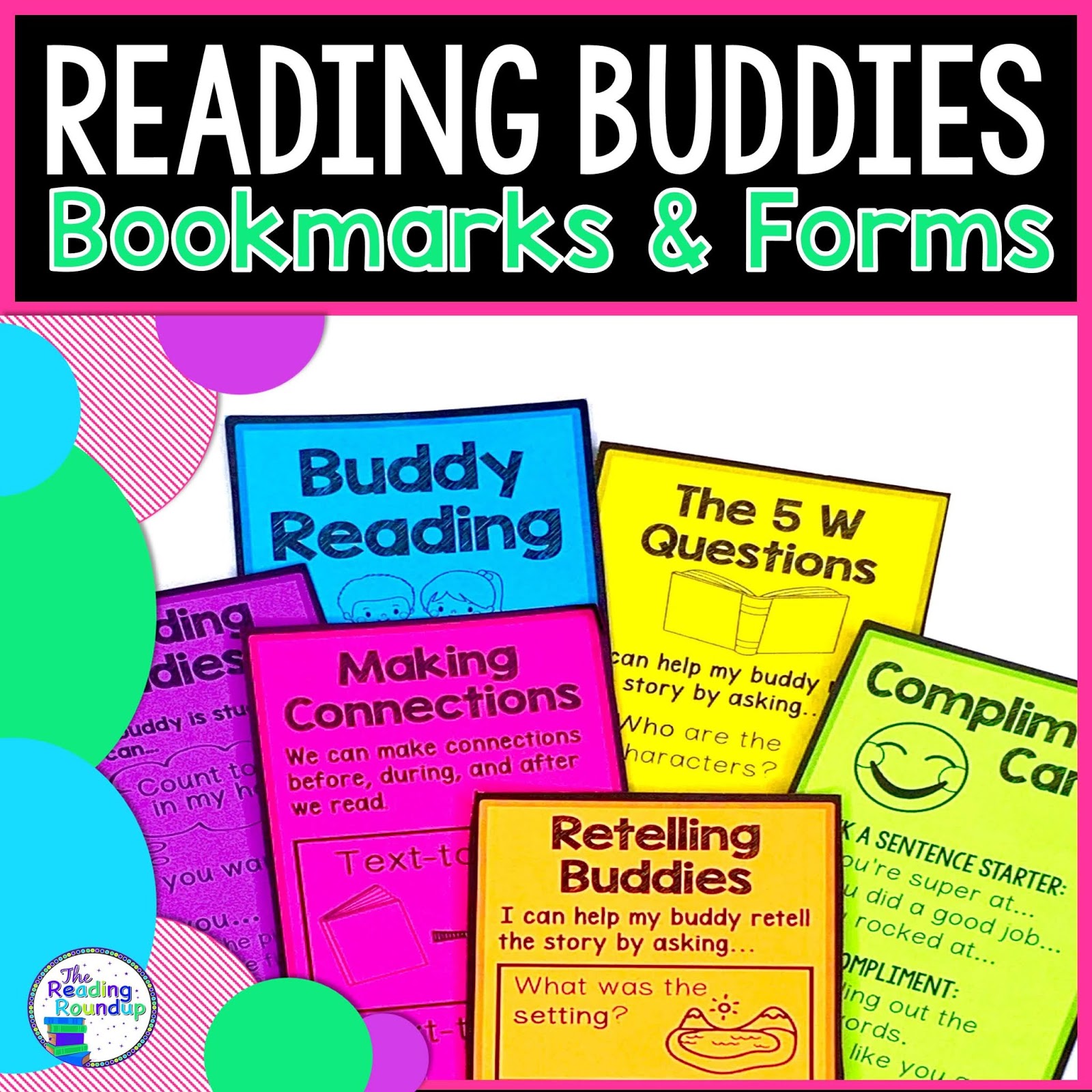
Along with modeling expected behaviors, you will want to provide prompts to help reading buddies be effective. These scaffolds may include visual reminders to remind students of the expectations during that time together. It is also beneficial to provide prompts for older students to support younger students when they get stuck.
Do you want to implement a Reading Buddies program in your elementary school? Check out these must read tips to ensure a successful and effective buddy reading program with your students! #thereadingroundup #buddyreading
Buddy Reading bookmarks scaffold students for success!


Allow Time for Discussion

The reading buddies program allows students to improve their comprehension as well as their fluency and accuracy. You can orally provide a comprehension prompt for all partnerships to discuss after reading. Students can also have discussion bookmarks with prompts depending on the desired skill you want them to focus on during that time. This could be retelling what they read, making connections, or reflecting on their reading fluency. For teachers who want even more accountability during this time, you may want to assign a shared reading response sheet for partners to complete. This might not be needed in most cases, but some classes might require the additional structure for success.
Do you want to implement a Reading Buddies program in your elementary school? Check out these must read tips to ensure a successful and effective buddy reading program with your students! #thereadingroundup #buddyreading
Reading response sheets that buddies can complete
together to increase student accountability.


Reflect on Reading

Lead students in a discussion after reading buddies to reflect on what went well and what they can improve upon next time. Upper-grade teachers will want to provide time to help students problem solve and practice strategies to better support their reading buddies. 


Plan Events to Build Relationships

The reading buddies program isn't just about reading. Teachers can plan other activities where older students help students with math tasks. Buddies can complete projects together such as holiday crafts and/or Stem challenges. It's also important to plan a fun event at the end of the year to celebrate a year of growth together! This can be as simple as a popsicle party!

Do you want to implement a Reading Buddies program in your elementary school? Check out these must read tips to ensure a successful and effective buddy reading program with your students! #thereadingroundup #buddyreading
Click to view the resources I use for buddy reading 
with my students - including the tools shown above!


Hopefully, this has inspired you to start or enhance your reading buddies program. If you've already implemented reading buddies, what other tips were most beneficial for you? Pin the following image and share your tips in the pin's comments!


WANT TO PIN THIS FOR LATER?

Do you want to implement a Reading Buddies program in your elementary school? Check out these must read tips to ensure a successful and effective buddy reading program with your students! #thereadingroundup #buddyreading


10 Reasons Why You Should Start a Reading Buddies Program NOW!


Reading Buddies is an effective program that promotes reading fluency and comprehension through authentic practice. Read on to find out the benefits of buddy reading that go beyond the literacy development of students. #thereadingroundup #buddyreading


Reading Buddies is a popular program that many schools implement with tremendous success. What exactly is this program and why should teachers use it with their students? Find out in this 2 Part Series on Reading Buddies! 


WHAT ARE READING BUDDIES?

The reading buddies program pairs up an older student with a younger student for them to take turns reading to one another. It allows for authentic reading practice and a model of fluent reading among many other benefits! Students may also engage in buddy reading with same-aged peers, but in this post the phrase "reading buddies" is referring to students of different ages. 

Reading Buddies is an effective program that promotes reading fluency and comprehension through authentic practice. Read on to find out the benefits of buddy reading that go beyond the literacy development of students. #thereadingroundup #buddyreading

BENEFITS FOR LITTLE BUDDIES

Younger buddies can gain a lot from the program but it may require some training with older students to be extremely successful. (Be sure to read part 2 of the series for tips on that!). Younger buddies benefit from reading buddies because they can:

Listen to a Fluent Model

Younger students grow as readers when they hear more experienced readers model fluent reading. The older students can demonstrate how fluent readers read with appropriate phrasing and intonation. Emergent readers also benefit from hearing their buddies read with accuracy and automaticity rather than needing to constantly sound out difficult words.

Observe a Peer Mentor

The benefits of buddy reading go beyond academics. Younger students can observe their buddy demonstrating positive behavior and valuable social skills. They see their buddy following the rules and remaining focused on the task. They also benefit from their buddy displaying positive character traits such as kindness and patience with them. 


Receive One-on-One Support

During buddy reading the younger students essentially have their own personal tutor helping them with their reading. The older students provide immediate feedback and offer strategies to help emergent readers decode unknown words. It also builds awareness and increases self-monitoring of comprehension as the older buddy can support the student when the reading no longer makes sense.
Reading Buddies is an effective program that promotes reading fluency and comprehension through authentic practice. Read on to find out the benefits of buddy reading that go beyond the literacy development of students. #thereadingroundup #buddyreading
Big buddies can use a tool like this to better
support younger buddies with their reading.


Reading Buddies is an effective program that promotes reading fluency and comprehension through authentic practice. Read on to find out the benefits of buddy reading that go beyond the literacy development of students. #thereadingroundup #buddyreading

BENEFITS FOR BIG BUDDIES

Even though older buddies provide many supports to the younger students, they also gain a lot from the experience. Older buddies benefit from reading buddies because they can:

Build Confidence

Struggling readers and shy students in the upper grades may not feel comfortable reading aloud with their same-aged peers. Reading to a younger student provides them with a chance to feel confident as a reader in a less intimidating environment. It naturally builds confidence when they know someone is looking up to them both academically and socially. The little buddies view their reading buddies as their role models and are in awe of them!

Act as a Mentor

In the same way reading buddies benefits older students who struggle with reading, it also helps students who have difficulty with self-control. They are forced to model positive character traits and set the example for responsible behavior during the designated time. The program naturally rewards them for good behavior by having someone look up to them rather than focusing on any negative behavior.

Practice Leadership Skills

Reading buddies provide older students with an opportunity to practice lifelong skills in authentic ways. They learn leadership, patience, and problem-solving strategies while working with their younger buddies.
Reading Buddies is an effective program that promotes reading fluency and comprehension through authentic practice. Read on to find out the benefits of buddy reading that go beyond the literacy development of students. #thereadingroundup #buddyreading
Big buddies can reflect on their weekly buddy reading experiences
and problem solve way to better support their little buddies.


Reading Buddies is an effective program that promotes reading fluency and comprehension through authentic practice. Read on to find out the benefits of buddy reading that go beyond the literacy development of students. #thereadingroundup #buddyreading

BENEFITS FOR BOTH BUDDIES

Even though the students have different roles in the partnership, both buddies gain value from the experience. Big and little buddies benefit from buddy reading because they can:


Practice Authentic Reading

The best way to get better at something is to practice, practice, practice. The same holds true for reading. All students benefit from the opportunity to practice reading to a live audience in an authentic manner.


Practice Reading Fluently

Since students are reading to another person, it naturally motivates them to practice reading fluently. It is the perfect opportunity to practice phrased and expressive reading. 

Engage in Meaningful Discussions about the Text

All students need time to discuss the texts they read to deepen comprehension. Talking about texts can also build excitement about reading. 

Build a Sense of Community

Typically students only interact with their same-aged peers, but reading buddies provide opportunities to make the school feel more connected. Reading buddies are always excited when they pass by in the hallways or see each other at school-wide events. Teachers can plan fun events for reading buddies such as popsicle parties, holiday crafts, or stem challenges. Every year our younger buddies write their older buddies notes of encouragement during state standardized testing. All of these moments help establish a strong sense of community within our school.

Now that you know the many benefits of reading buddies and are hopefully feeling motivated to start implementing them, you may have a lot of questions about HOW to begin. Be sure to check out Part 2 of the Reading Buddies Series to learn my best tips for implementing this program with your students!


WANT TO PIN THIS FOR LATER?

Reading Buddies is an effective program that promotes reading fluency and comprehension through authentic practice. Read on to find out the benefits of buddy reading that go beyond the literacy development of students. #thereadingroundup #buddyreading


A Simple Activity for Story Elements Practice

Are you looking for a fun way for students to practice retelling fictional texts? I have the PERFECT activity I use to work on story elements in an engaging way. Students play a dice game to answer various comprehension questions. Engaging and fun for students!

Are you looking for a fun way for students to practice retelling fictional texts? I have the PERFECT activity I use to work on story elements in an engaging way. Students play a dice game to answer various comprehension questions. Read on to find out how I use this activity with my students!

**This post contains affiliate links.**

What is Roll-a-Retell?

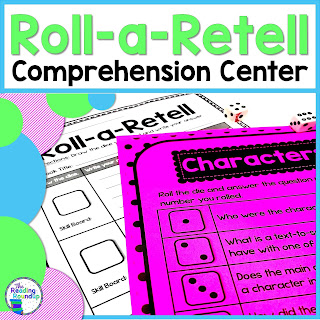
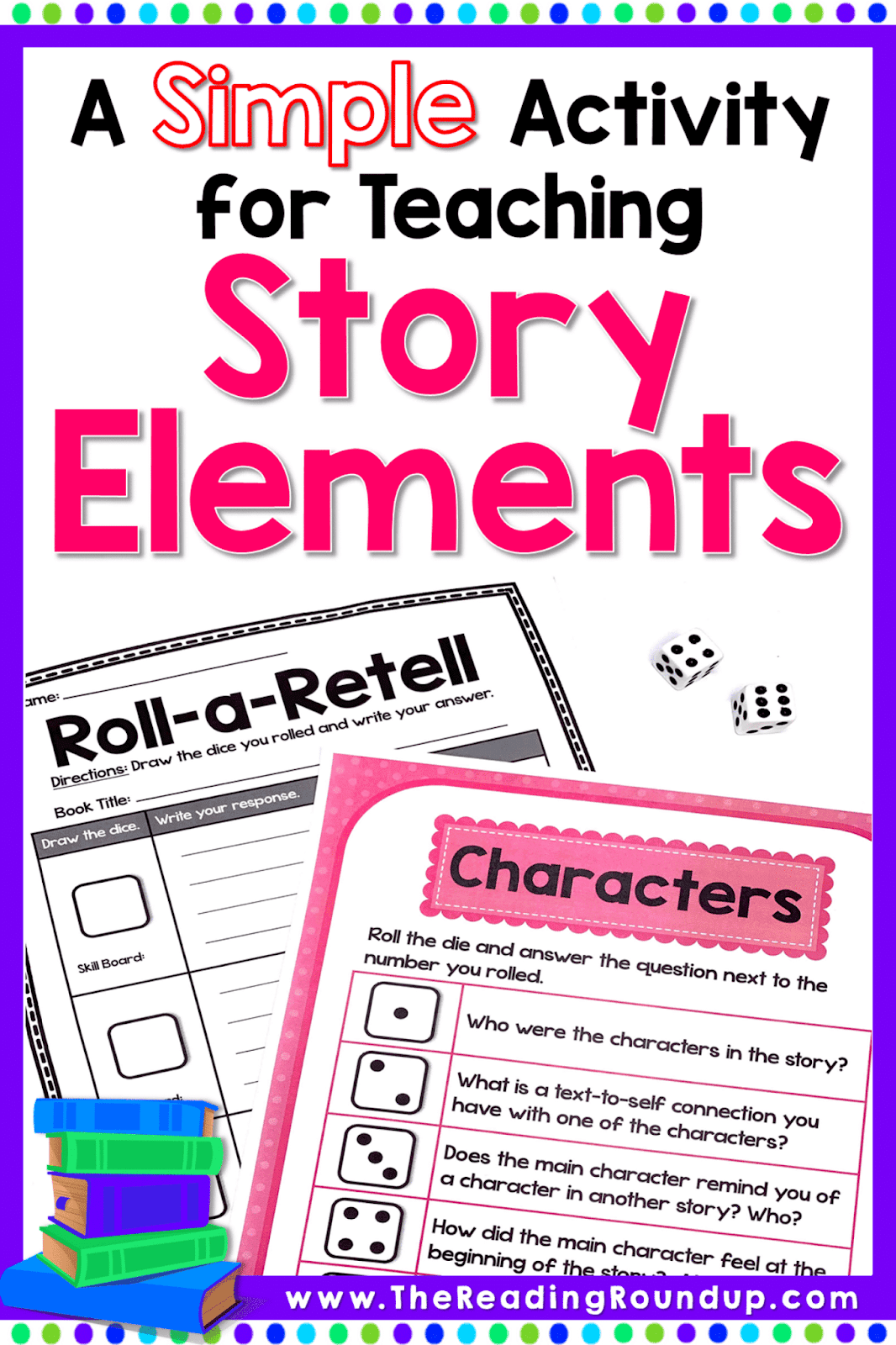
Roll-a-Retell is a dice game for comprehension practice. Students roll a dice and answer a question that corresponds to the number they rolled. They can answer the question orally or in a written response.
Are you looking for a fun way for students to practice retelling fictional texts? I have the PERFECT activity I use to work on story elements in an engaging way. Students play a dice game to answer various comprehension questions. Engaging and fun for students!

Setting up the Activity

Decide which comprehension skills you would like to focus on with the activity. Some suggested skills include: retelling, character analysis, story elements, making connections, and theme.

Create 6 questions stems for each skill you'd like to include. You can easily differentiate the activity by the skills and difficulty level of the questions you use. You may want to scaffold the questions and increase difficulty based on the number. (Think Bloom's Taxonomy). For example if you're working on characters, a #1 question could be "Who was the main character" while a #6 question could ask "Would you be friends with the main character? Why or Why not?" After students are familiar with the activity they can create their own questions!
Are you looking for a fun way for students to practice retelling fictional texts? I have the PERFECT activity I use to work on story elements in an engaging way. Students play a dice game to answer various comprehension questions. Engaging and fun for students!

Choose a way to display the questions to students. You may want to create a visual for your literacy centers or on a bookmark. Digital options could be showing it on your board or with a QR Code for students to access the questions.

Before implementing the activity, decide how you would like students to respond. If they're responding orally you will not need to prep anything. But if you opt for a written response you need to decide how that will look. Some options for recording their responses are: in their Readers Notebooks, on plain notebook paper, white boards, or a specific recording sheet. I prefer using a recording sheet so I can collect it. This allows me to informally assess their comprehension as well as holds them more accountable for their work. 
Are you looking for a fun way for students to practice retelling fictional texts? I have the PERFECT activity I use to work on story elements in an engaging way. Students play a dice game to answer various comprehension questions. Engaging and fun for students!

Ways to Implement the Activity

Guided Reading

This is my students' favorite activity to do during guided reading! After we finish reading a fiction story, we use a Roll-a-Retell game board to answer comprehension questions about the text. I select questions based on the skills that we are targeting within our group. It's a fun and easy way to informally assess students' comprehension of the text. Plus it's engaging and changes things up a bit for the students.

Literacy Centers

Students can work with a buddy to complete this activity during centers. They can each read an individual book or read a book together. After finishing the book(s), the students take turns rolling the dice. You may opt to have students orally respond to the questions or have them write down their answers. 

IKEA 2-Sided Picture Frames are perfect to use for Literacy Centers!
Click to purchase the frames!

**Tip for Centers Setup!**
I love using 2-sided frames for centers. It is easy to print off directions and keep at the table where students are completing the centers activity. For the Roll-a-Retell activity, I place the questions I want students to answer in the frame. Super simple way to keep things organized!

Independent Reading

Students can also complete this activity during independent reading. After they read a fiction book, they can answer comprehension questions about the story. This is the perfect opportunity for reading response in students' Readers Notebooks.
Are you looking for a fun way for students to practice retelling fictional texts? I have the PERFECT activity I use to work on story elements in an engaging way. Students play a dice game to answer various comprehension questions. Engaging and fun for students!
Click to download the boards I use!

Have you used the Roll-a-Retell activity with your students? Share your tips for implementing this or similar activities in the comments below!


Want to Pin This for Later?

Are you looking for a fun way for students to practice retelling fictional texts? I have the PERFECT activity I use to work on story elements in an engaging way. Students play a dice game to answer various comprehension questions. Engaging and fun for students!

Sight Word Flash Card Games

Sight word practice is essential for students in kindergarten, 1st, and 2nd grade. Check out these FREE sight word games you can easily play with flash cards.

Sight words are a crucial part of reading for all students, especially those in kindergarten, 1st, and 2nd grade. If students have a solid base of sight word knowledge, it anchors their reading and allows them to focus more on decoding unknown words in text. But how do teachers help build students' sight word vocabulary? Here are some games I love using during centers and guided reading groups to increase students' number of known sight words.


Poke! Sight Word Game

This game is my students' FAVORITE. They constantly beg me to play just "one more round" which turns into a couple more rounds since it's a quick game.

In order to prepare the game, I print off the sight word flash cards that the students are currently working to master. I also print multiple Poke! cards. 

To play, I show the students in a group one flash card at a time. If they can read the word quickly and correctly, they get to keep the card. If they read it incorrectly or hesitate to read it, then the next student gets a turn to earn it. BUT don't get the Poke! card or you'll lose all of your cards to the player beside you. This part is their favorite and always leads to lots of laughs!


Go Fish

In order to play this game, I print two copies of each sight word that students are working to master. They play this game using the typical Go Fish rules. Students take 5 cards and try to make matches. Student 1 asks Student 2 for a specific sight word. If Student 2 has the card, they hand it to Student 1 to make a match. If Student 2 does not have the card he/she says "Go Fish" and Student 1 draws from the pile. Students continue alternating turns until no cards remain. The winner is the student with the most matches. 
Sight word practice is essential for students in kindergarten, 1st, and 2nd grade. Students can play this fun and FREE sight word Go Fish game with flash cards.

Another fun alternative to the game is letting students literally fish for sight words! Add a paperclip to each sight word and place them in a shallow container or on the ground. Attach a magnet to the end of string on a pencil to use as a fishing pole. Students can either fish to find matching flash cards or work to collect sight words that they can read correctly.


Memory Match Game

This game also requires you to print two copies of each sight word you want students to practice. Students lay all of the flash cards face down to begin the game. They take turns selecting 2 cards in order to find matching sight words. If they find a match, they get to go again. The game continues until all matches have been found. The winner is the student with the most matches. Make sure to have students orally read the cards they select for additional practice.
Sight word practice is essential for students in kindergarten, 1st, and 2nd grade. Students can play this fun and FREE sight word Memory Match game with flash cards.

Slapjack

Slapjack is another simple sight word game I play with my students. All of the flash cards are placed in a pile face down. I flip a card over one at a time. If a student knows the word, they quickly slap it with their hand. The student who slaps the word first, gets a chance to earn the card by correctly reading it. If they're incorrect, the next student gets a chance to earn the word. I also like to sneak some of the Poke! cards as an additional challenge. They do not want to slap the Poke! card because it means they lose all of their cards. 

Another version of this game is to lay all of the cards on the table face up. The teacher says one of the sight words and the students have to be the first one to find it. If they find it first, they get to keep the card. The game continues until all cards are gone and the winner is the student with the most cards. You can have students slap the words with their hands, pointers, flyswatters, or any other fun tools you may have!


Sight Word Games Implementation

Literacy Centers

This is an easy literacy center you can use! Once you teach students the games, they can play them independently. I print off different cards throughout the year based on what students are currently working to master. I also have different thematic flash card sets that I alternate each month as a way to change it up.

I also keep the flash cards at various centers for additional activities. For example, at word work center students select a flash card and practice writing that sight word using magnetic letters, rainbow writing, letter tiles, etc. 


Guided Reading

I play a sight word game at the end of my guided reading groups. It's a fun and quick way to practice reading the sight words. I use the flash cards of the words that group is currently working on mastering. It also serves as a quick informal assessment of the sight words students already know or are still learning.


Fast Finishers

As a classroom teacher, I always kept several sets of sight word flash cards available. Students knew that if they finished their work they could play one of our sight word games with a buddy. It was a simple way for students to independently practice sight words.

Parent Volunteers
At our school, we are fortunate to always have a lot of adult volunteers. These volunteers are dads in our Watch Dogs Program, copy moms, and high school teacher cadets. By having sets of sight word games always available, I can easily have the volunteer play a game with a group of students. It requires NO additional prep and I'm always ready on the days I have a volunteer show up that I wasn't expecting!
Sight word practice is essential for students in kindergarten, 1st, and 2nd grade. Check out these FREE sight word data graphs to monitor students' progress.


Assessment

Practicing sight words through games is one aspect of mastery, but it is also crucial for us to assess students' progress. You may be interested in checking out my corresponding blog post about assessing sight word mastery where you can download another FREEBIE!


Sight Word Flash Cards FREEBIE

Are you interested in implementing these sight word activities with your students? Be sure to download this freebie to start playing the games in your classroom! 
(It includes the PrePrimer set from my July flash cards game.)

Sight word practice is essential for students in kindergarten, 1st, and 2nd grade. Check out these FREE sight word games you can easily play with flash cards.


Do you play sight word games with your students? Do you already play versions of these games or different ones not mentioned? Share your experiences with sight word games in the comments below!


Want to pin this for later?

Sight word practice is essential for students in kindergarten, 1st, and 2nd grade. Check out these FREE sight word games you can easily play with flash cards.


Practice Making Words to Improve Students' Phonics Skills

Are you looking for an easy and engaging literacy center that you can use with your students all year? Making Words is the perfect activity to help improve students' phonics and spelling skills.

Are you looking for an easy and engaging literacy center that you can use with your students all year? Making Words is the perfect activity to help improve students' phonics skills. Keep reading for tips on implementing this strategy in your classroom!
**This post contains affiliate links.**
Are you looking for an easy and engaging literacy center that you can use with your students all year? Making Words is the perfect activity to help improve students' phonics skills.

What is the Making Words strategy?

Making Words is a hands on phonics activity that promotes students' phonological awareness and spelling skills. Students manipulate letter tiles to create words by blending the sounds together. They will need to change letters, add letters, and move letters around to spell new words. This multi-sensory approach deepens students' understanding of how words work.

Click to view book!

Patricia Cunningham offers the Making Words book that explicitly leads teachers and students through the activity. The teacher begins with the "secret word" in mind and then guides students to create smaller words using the letters in the secret word. The word difficulty gradually increases and the words build off of each other until the students eventually determine the secret word.

Some skills targeted by this activity:

  • Initial and ending sounds
  • Vowel sounds (long, short, silent e, digraphs)
  • Blends and Digraphs
  • Word families and rhyming words
  • Prefixes and Suffixes
  • Sight words

What is an alternative approach to this strategy?

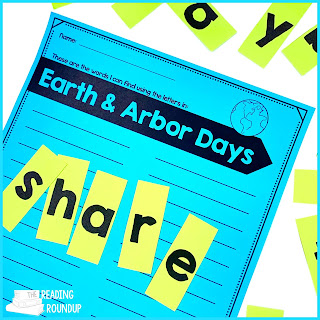
I modify Patricia Cunningham's approach and implement a more open ended activity. I provide students with the letters of various holiday and theme words. They then brainstorm all of the words they are able to make using those letters. It gives me an opportunity to see students' independent phonics and spelling skills, but I can also scaffold the learning for students when necessary.

Are you looking for an easy and engaging literacy center that you can use with your students all year? Making Words is the perfect activity to help improve students' phonics skills.
For Halloween, we used black lights and highlighters to complete the activity!


What are the benefits of using Making Words?

When students use this hands on approach, it makes their knowledge of how words work more concrete. This multi-sensory strategy is highly effective for struggling readers and students with Dyslexia to improve their phonological awareness. The open ended approach is naturally differentiated. Some students may only be able to change initial/ending sounds in CVC words while others may be able to add affixes to make more complex words. 

Making Words is an extremely beneficial informal assessment. Teachers can quickly see which specific phonics skills students have mastered and those that require additional practice. Students may surprise you by either achieving more than you thought they could or struggling on skills you thought they knew. I've been surprised by 5th graders still missing short vowel sounds in CVC words or a struggling 2nd grade reader adding -ly to make the word sadly

Are you looking for an easy and engaging literacy center that you can use with your students all year? Making Words is the perfect activity to help improve students' phonics skills.


What are the steps for implementing this activity?

  1. Determine the final word you want to use.
  2. Provide students with all of the letters in the word you choose.
  3. Give students a recording sheet.
  4. Encourage students to manipulate the letters to see how many words they can make.
  5. Provide prompts to help students who may struggle coming up with words independently.

How does this fit into my Reading Workshop?

There are two options for implementation depending on the needs of your students. When introducing the activity and/or working with struggling readers, I recommend completing this within a small group. It allows the teacher to model and prompt students to help them find success. The small group format also makes informal observation and assessment easier.

Another option is to incorporate this activity into literacy centers, specifically Gail Boushey and Joan Moser's Daily 5 Word Work center. You may choose to print letters for individual students to use or larger letters for students to collaboratively manipulate using a pocket chart.


How do I organize the materials?

I have letters and recording sheets for holidays and themes already prepared that can be used throughout the entire year. They have each been printed on cardstock and laminated for reuse. You can also use the dry erase pocket sleeves to reuse the recording sheets. Each set of letters is stored in a small sandwich bag. The recording sheets and letter bags are kept in a small file box. By preparing it this way, I save paper and always have the activity ready. Plus I avoid fighting with the copy machine!

Are you looking for an easy and engaging literacy center that you can use with your students all year? Making Words is the perfect activity to help improve students' phonics skills.

How do I support students with this skill?

You may need to model strategies to students to show them how to add/change letters to make new words. Here are some prompts you may need to provide to students:
  • Change the first letter 
  • Change the vowel sound 
  • Add a silent e 
  • Add an ending (-s, -ing) 
  • Think of a word that rhymes with ____
  • Think of sight words you know
  • Add a digraph to the beginning/end of the word
  • Add a blend to the beginning/end of the word
  • Add a prefix
  • Add a suffix 
  • Combine words to make a compound word
  • Segment sounds and have students blend the sounds together to figure out the word 
  • Provide clues for words to make: A big yellow circle in the sky 

Are you interested in using this engaging phonics activity with your students throughout the entire school year? Click to download the resource!
Are you looking for an easy and engaging literacy center that you can use with your students all year? Making Words is the perfect activity to help improve students' phonics skills.
Download Here!

Making Words is a highly effective strategy to reinforce phonics and spelling skills with your students. Have you tried this activity with your students? Let us know your experiences with this hands on strategy!


Want to save this for later?

Are you looking for an easy and engaging literacy center that you can use with your students all year? Making Words is the perfect activity to help improve students' phonics and spelling skills.