Image Map
Showing posts with label guided reading. Show all posts

Tooth Trouble

Tooth Trouble by Jane Clarke is the perfect book to share with students for Dental Awareness month as well as to teach reading skills such as problem/solution, sequencing, and character analysis to primary readers.
* This post contains affiliate links *

Tooth Trouble by Jane Clarke is the perfect book to share with students for Dental Awareness month in February. It tells the story of Wilbur the walrus whose tusk hurts but he is too afraid to go to the dentist.

Not only is this book ideal for teaching dental health, there are various literacy skills that can also be taught using this book. The best part is it's written at 2nd grade reading level so students can enjoy it independently!


Skills to Teach with this Book:

  • Problem/Solution - The conflict and resolution are explicitly stated which makes them easy for early readers to identify.
  • Sequencing Events - This book naturally lends itself to using the "Somebody Wanted But So Then" model.'
  • Character Changes - Compare how Wilbur feels at the beginning of the story to how he feels at the end.
  • Retelling - I use this book to practice three different retelling strategies to help students remember what they read (as shown in the first picture). Click to find out more and to download the FREEBIE shown below!

Tooth Trouble by Jane Clarke is the perfect book to share with students for Dental Awareness month as well as to teach reading skills such as problem/solution, sequencing, and character analysis to primary readers.
Click to find out more about this book!

Have you used this book with your students? What other skills/strategies have you used it to teach? Share in the comments!

WANT TO PIN THIS FOR LATER?

Tooth Trouble by Jane Clarke is the perfect book to share with students for Dental Awareness month as well as to teach reading skills such as problem/solution, sequencing, and character analysis to primary readers.

Retelling Strategies Made Simple

FInd out how to support your students to find which retelling strategy works best for them: Stop, Think Paraphrase, Stop & Jot, or Stop & Sketch.

My students struggle to remember what they've read. As a result, we've been working on actively thinking about the text as they read. One way we do this is by stopping on each page to retell what they read using three strategies:

  • Stop, Think, Paraphrase - SAY what happened
  • Stop and Jot - WRITE what happened
  • Stop and Sketch - DRAW what happened

https://drive.google.com/uc?export=view&id=1RM8ybNUpeh3IQVlpvakrvsiUi5rPJvH9
Scroll to the end of the post to download a FREE version of this sign!

Teaching Sequence

Initially, I begin by introducing each of the strategies separately using the gradual release of responsibility method. 

  • Model the strategy. (I DO)
  • Practice it together with my modeling and them practicing it at the same time. (WE DO)
  • Provide opportunities for students to independently practice the strategy while offering them support. (YOU DO)

Eventually, we practice all three strategies together using one text. During my read aloud, we first stop after each page and practice paraphrasing together as a group (Stop, Think, Paraphrase). 

I model how I simplify my paraphrasing and write down what happened in the story (Stop and Jot). I challenge the students to write 5 words or less when they jot, since their paraphrasing tends to be wordy. This encourages them to focus on the most important details. Plus the purpose of the strategy is to write a quick note to help them remember what they read without overwhelming them by having to write a lot.

I also model drawing a quick picture to summarize what happened (Stop and Sketch). Similar to the Stop and Jot strategy, I remind them it's only a quick sketch to help remember what they read. As a result, I tell them it's not art class and recommend they use stick figures to save time.

As I'm modeling each strategy, students practice applying them in their own reading notebooks. You can use any loose-leaf paper, whiteboards, post-it notes, etc. I prefer to keep it all within one notebook so I'm able to view their progress with the strategies. 


Next Steps

After finishing the book, I model how to use our notes/sketches to retell the story. This shows students how the stategies help them remember what they've read.

We also practice using our notes to easily find answers to questions, since inevitably students are expected to take standardized tests. I ask questions and they use their notes to answer the questions and/or tell me which page to find the evidence. 

By using our notes to practice these additional skills, it leads to more student buy-in. They begin to see exactly how these strategies can help them be more successful with their reading.
FInd out how to support your students to find which retelling strategy works best for them: Stop, Think Paraphrase, Stop & Jot, or Stop & Sketch.

Tips for Success

Even though we practice all three strategies at the same time, I do not expect students to implement them all at once. I model and guide students through all three but ask them to try one strategy for each page. The goal is for them to ultimately decide which strategy works best for them based on their own strengths. As we know some students love to draw but dread writing. So why force them to use an approach that isn't a good fit for them?

My daily exit ticket for students is to tell me the strategy that we practiced. But I don't allow them to just name the strategy, they must explain to me what we did. If they're able to explain it, that helps them internalize the strategy.

Another part of their exit ticket is to reflect on if the strategy was effective for them and I ask them to tell me why/why not. My goal is to help them find strategies that work best for them, so it is crucial for them to self reflect.


Read Alouds

Check out some of the picture books we have used to practice these strategies. Click on the links to find out more about each book!
FInd out how to support your students to find which retelling strategy works best for them: Stop, Think Paraphrase, Stop & Jot, or Stop & Sketch. FREE Download!
Click to download this FREE image!


Have you used any of these retelling strategies with your students? Share your tips for implementation or other strategies that you have found successful in the comments!


WANT TO PIN THIS FOR LATER?

Find out how to support your students to find which retelling strategy works best for them: Stop, Think Paraphrase, Stop & Jot, or Stop & Sketch.


A Simple Activity for Story Elements Practice

Are you looking for a fun way for students to practice retelling fictional texts? I have the PERFECT activity I use to work on story elements in an engaging way. Students play a dice game to answer various comprehension questions. Engaging and fun for students!

Are you looking for a fun way for students to practice retelling fictional texts? I have the PERFECT activity I use to work on story elements in an engaging way. Students play a dice game to answer various comprehension questions. Read on to find out how I use this activity with my students!

**This post contains affiliate links.**

What is Roll-a-Retell?

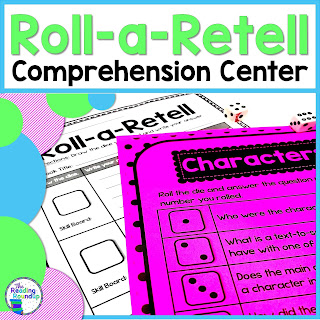
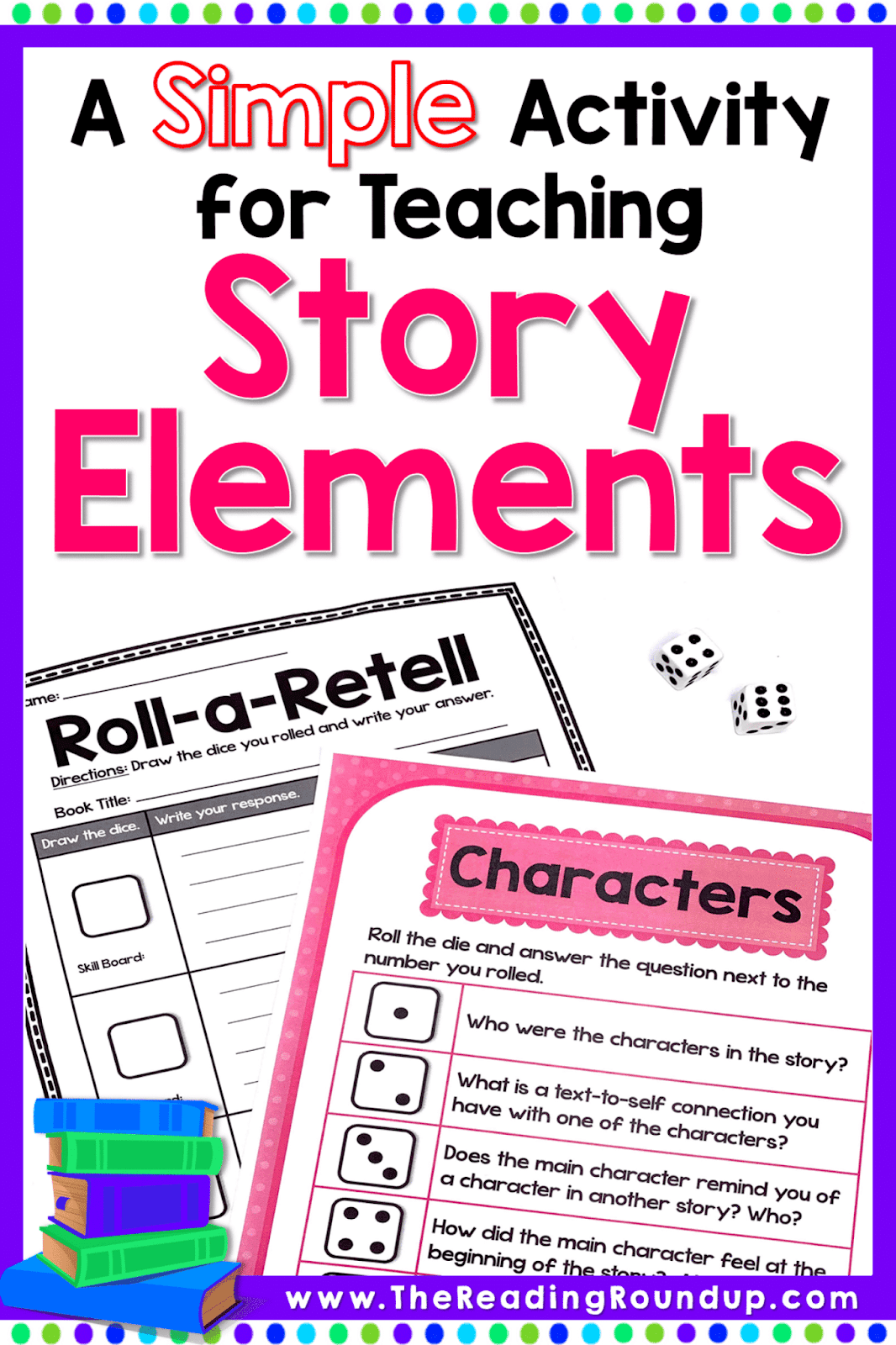
Roll-a-Retell is a dice game for comprehension practice. Students roll a dice and answer a question that corresponds to the number they rolled. They can answer the question orally or in a written response.
Are you looking for a fun way for students to practice retelling fictional texts? I have the PERFECT activity I use to work on story elements in an engaging way. Students play a dice game to answer various comprehension questions. Engaging and fun for students!

Setting up the Activity

Decide which comprehension skills you would like to focus on with the activity. Some suggested skills include: retelling, character analysis, story elements, making connections, and theme.

Create 6 questions stems for each skill you'd like to include. You can easily differentiate the activity by the skills and difficulty level of the questions you use. You may want to scaffold the questions and increase difficulty based on the number. (Think Bloom's Taxonomy). For example if you're working on characters, a #1 question could be "Who was the main character" while a #6 question could ask "Would you be friends with the main character? Why or Why not?" After students are familiar with the activity they can create their own questions!
Are you looking for a fun way for students to practice retelling fictional texts? I have the PERFECT activity I use to work on story elements in an engaging way. Students play a dice game to answer various comprehension questions. Engaging and fun for students!

Choose a way to display the questions to students. You may want to create a visual for your literacy centers or on a bookmark. Digital options could be showing it on your board or with a QR Code for students to access the questions.

Before implementing the activity, decide how you would like students to respond. If they're responding orally you will not need to prep anything. But if you opt for a written response you need to decide how that will look. Some options for recording their responses are: in their Readers Notebooks, on plain notebook paper, white boards, or a specific recording sheet. I prefer using a recording sheet so I can collect it. This allows me to informally assess their comprehension as well as holds them more accountable for their work. 
Are you looking for a fun way for students to practice retelling fictional texts? I have the PERFECT activity I use to work on story elements in an engaging way. Students play a dice game to answer various comprehension questions. Engaging and fun for students!

Ways to Implement the Activity

Guided Reading

This is my students' favorite activity to do during guided reading! After we finish reading a fiction story, we use a Roll-a-Retell game board to answer comprehension questions about the text. I select questions based on the skills that we are targeting within our group. It's a fun and easy way to informally assess students' comprehension of the text. Plus it's engaging and changes things up a bit for the students.

Literacy Centers

Students can work with a buddy to complete this activity during centers. They can each read an individual book or read a book together. After finishing the book(s), the students take turns rolling the dice. You may opt to have students orally respond to the questions or have them write down their answers. 

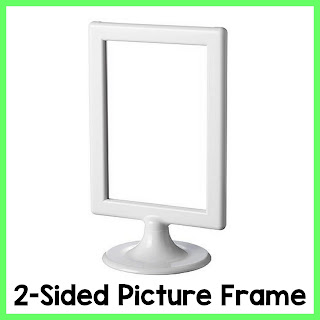
IKEA 2-Sided Picture Frames are perfect to use for Literacy Centers!
Click to purchase the frames!

**Tip for Centers Setup!**
I love using 2-sided frames for centers. It is easy to print off directions and keep at the table where students are completing the centers activity. For the Roll-a-Retell activity, I place the questions I want students to answer in the frame. Super simple way to keep things organized!

Independent Reading

Students can also complete this activity during independent reading. After they read a fiction book, they can answer comprehension questions about the story. This is the perfect opportunity for reading response in students' Readers Notebooks.
Are you looking for a fun way for students to practice retelling fictional texts? I have the PERFECT activity I use to work on story elements in an engaging way. Students play a dice game to answer various comprehension questions. Engaging and fun for students!
Click to download the boards I use!

Have you used the Roll-a-Retell activity with your students? Share your tips for implementing this or similar activities in the comments below!


Want to Pin This for Later?

Are you looking for a fun way for students to practice retelling fictional texts? I have the PERFECT activity I use to work on story elements in an engaging way. Students play a dice game to answer various comprehension questions. Engaging and fun for students!

Sight Word Assessment

Assessments and data graphs are crucial for progress monitoring students' sight word mastery. Find out how I formally and informally assess students' sight word knowledge during guided reading using these FREE data graphs.

In order for students to become fluent readers, they need to develop a large base of known sight words. There are so many amazing resources and activities available online for fun ways to practice sight words, but how should we be assessing students' sight word mastery? Teachers need to be progress monitoring on a regular basis to determine students' known sight words and the ones they need to practice more. Find out how I regularly assess my students' sight word knowledge.


Informal Assessment During Guided Reading

Part of my daily guided reading routine includes sight word practice. This may include a quick write on white boards of known sight words or playing a fun review game. (For ideas of the games I play check out this blog post!) During these activities I informally assess students to see which words they know automatically and which are still unknown.

For each guided reading group, I have two separate data graphs. I select a graph of the Dolch sight word lists (PrePrimer, Primer, 1st Grade, 2nd Grade, 3rd Grade) depending on the students' current reading and ability levels. Typically I have one graph to document the words that students can READ and another graph to assess which words they can WRITE correctly. I like to track these skills separately since students' mastery of words they can read and write will vary.

Assessments and data graphs are crucial for progress monitoring students' sight word mastery. Find out how I formally and informally assess students' sight word knowledge during guided reading using these FREE data graphs.
Data graphs I use to informally assess students during guided reading.
As we complete the sight word activities, I document each individual student's success with reading and/or writing the word. If they are able to read or write the word quick and accurately, I give them a check in the box next to the corresponding sight word. If they are incorrect or hesitant with the word I give them an X.  As you can see from the picture above students will have multiple checks and Xs next to each word. This helps me determine which words to be practicing with students each day.

Formal Assessment for RTI Data Binders

Progress monitoring using formal assessments and data binders are a crucial component of the RTI interventions I provide. I aim to formally assess students' sight word mastery at least once a month.

To administer this assessment, I work with students one-on-one while the other students in my group read independently. Obviously it may take longer for classroom teachers to administer the assessment. If you're fortunate enough to have a teacher assistant or parent volunteers they can assist with the assessment.

Assessments and data graphs are crucial for progress monitoring students' sight word mastery. Find out how I formally and informally assess students' sight word knowledge during guided reading using these FREE data graphs.
Sight words are sorted into 3 piles during the assessment.

During the assessment, the students read the sight words to me. As they read the words I separate them into 3 separate piles as shown above: Nailed It!, Almost, Not Yet. If they are able to read the word quickly and accurately, it is placed in the Nailed It! pile. Words that are read incorrectly go in the Not Yet pile. If a student hesitates on a word, reads it incorrectly but self corrects, or needs to sound it out I place it in the Almost pile. This helps me make sure I'm only tracking the words that students have definitely mastered.

Sight Word Data Graphs

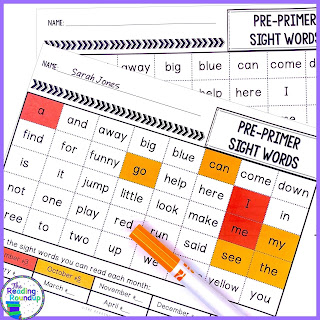
After administering the assessment, I fill out the data graphs for each student. As mentioned above, the data graphs are based on the Dolch sight word lists: PrePrimer, Primer, 1st Grade, 2nd Grade, and 3rd Grade. The list I use for each student depends on their current reading and ability level. 
Assessments and data graphs are crucial for progress monitoring students' sight word mastery. Find out how I formally and informally assess students' sight word knowledge during guided reading using these FREE data graphs.
Monthly data lists to monitor students' progress
The data graphs document which month the students master the sight words. Each month is given a different color on the graphs to provide a quick visual overview of when the students mastered the sight words. For example, the words the students mastered in September are colored red. I also write the number of newly mastered sight words at the bottom of the graph. It helps me notice trends of students who are progressing as expected or below expectations. This knowledge allows me to adjust my instruction accordingly to the students' individual needs.
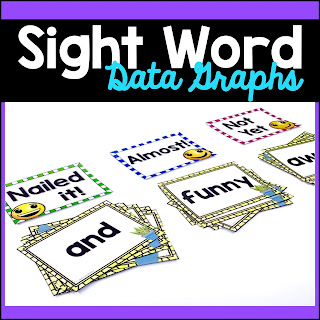
Assessments and data graphs are crucial for progress monitoring students' sight word mastery. Find out how I formally and informally assess students' sight word knowledge during guided reading using theses FREE data graphs.
Submit the form below to download the data graphs in this post!


How do you assess sight words? Do you assess your students monthly or weekly? Please share with us in the comments below!

Want to Pin This for Later?


Sight Word Flash Card Games

Sight word practice is essential for students in kindergarten, 1st, and 2nd grade. Check out these FREE sight word games you can easily play with flash cards.

Sight words are a crucial part of reading for all students, especially those in kindergarten, 1st, and 2nd grade. If students have a solid base of sight word knowledge, it anchors their reading and allows them to focus more on decoding unknown words in text. But how do teachers help build students' sight word vocabulary? Here are some games I love using during centers and guided reading groups to increase students' number of known sight words.


Poke! Sight Word Game

This game is my students' FAVORITE. They constantly beg me to play just "one more round" which turns into a couple more rounds since it's a quick game.

In order to prepare the game, I print off the sight word flash cards that the students are currently working to master. I also print multiple Poke! cards. 

To play, I show the students in a group one flash card at a time. If they can read the word quickly and correctly, they get to keep the card. If they read it incorrectly or hesitate to read it, then the next student gets a turn to earn it. BUT don't get the Poke! card or you'll lose all of your cards to the player beside you. This part is their favorite and always leads to lots of laughs!


Go Fish

In order to play this game, I print two copies of each sight word that students are working to master. They play this game using the typical Go Fish rules. Students take 5 cards and try to make matches. Student 1 asks Student 2 for a specific sight word. If Student 2 has the card, they hand it to Student 1 to make a match. If Student 2 does not have the card he/she says "Go Fish" and Student 1 draws from the pile. Students continue alternating turns until no cards remain. The winner is the student with the most matches. 
Sight word practice is essential for students in kindergarten, 1st, and 2nd grade. Students can play this fun and FREE sight word Go Fish game with flash cards.

Another fun alternative to the game is letting students literally fish for sight words! Add a paperclip to each sight word and place them in a shallow container or on the ground. Attach a magnet to the end of string on a pencil to use as a fishing pole. Students can either fish to find matching flash cards or work to collect sight words that they can read correctly.


Memory Match Game

This game also requires you to print two copies of each sight word you want students to practice. Students lay all of the flash cards face down to begin the game. They take turns selecting 2 cards in order to find matching sight words. If they find a match, they get to go again. The game continues until all matches have been found. The winner is the student with the most matches. Make sure to have students orally read the cards they select for additional practice.
Sight word practice is essential for students in kindergarten, 1st, and 2nd grade. Students can play this fun and FREE sight word Memory Match game with flash cards.

Slapjack

Slapjack is another simple sight word game I play with my students. All of the flash cards are placed in a pile face down. I flip a card over one at a time. If a student knows the word, they quickly slap it with their hand. The student who slaps the word first, gets a chance to earn the card by correctly reading it. If they're incorrect, the next student gets a chance to earn the word. I also like to sneak some of the Poke! cards as an additional challenge. They do not want to slap the Poke! card because it means they lose all of their cards. 

Another version of this game is to lay all of the cards on the table face up. The teacher says one of the sight words and the students have to be the first one to find it. If they find it first, they get to keep the card. The game continues until all cards are gone and the winner is the student with the most cards. You can have students slap the words with their hands, pointers, flyswatters, or any other fun tools you may have!


Sight Word Games Implementation

Literacy Centers

This is an easy literacy center you can use! Once you teach students the games, they can play them independently. I print off different cards throughout the year based on what students are currently working to master. I also have different thematic flash card sets that I alternate each month as a way to change it up.

I also keep the flash cards at various centers for additional activities. For example, at word work center students select a flash card and practice writing that sight word using magnetic letters, rainbow writing, letter tiles, etc. 


Guided Reading

I play a sight word game at the end of my guided reading groups. It's a fun and quick way to practice reading the sight words. I use the flash cards of the words that group is currently working on mastering. It also serves as a quick informal assessment of the sight words students already know or are still learning.


Fast Finishers

As a classroom teacher, I always kept several sets of sight word flash cards available. Students knew that if they finished their work they could play one of our sight word games with a buddy. It was a simple way for students to independently practice sight words.

Parent Volunteers
At our school, we are fortunate to always have a lot of adult volunteers. These volunteers are dads in our Watch Dogs Program, copy moms, and high school teacher cadets. By having sets of sight word games always available, I can easily have the volunteer play a game with a group of students. It requires NO additional prep and I'm always ready on the days I have a volunteer show up that I wasn't expecting!
Sight word practice is essential for students in kindergarten, 1st, and 2nd grade. Check out these FREE sight word data graphs to monitor students' progress.


Assessment

Practicing sight words through games is one aspect of mastery, but it is also crucial for us to assess students' progress. You may be interested in checking out my corresponding blog post about assessing sight word mastery where you can download another FREEBIE!


Sight Word Flash Cards FREEBIE

Are you interested in implementing these sight word activities with your students? Be sure to download this freebie to start playing the games in your classroom! 
(It includes the PrePrimer set from my July flash cards game.)

Sight word practice is essential for students in kindergarten, 1st, and 2nd grade. Check out these FREE sight word games you can easily play with flash cards.


Do you play sight word games with your students? Do you already play versions of these games or different ones not mentioned? Share your experiences with sight word games in the comments below!


Want to pin this for later?

Sight word practice is essential for students in kindergarten, 1st, and 2nd grade. Check out these FREE sight word games you can easily play with flash cards.