

Are you looking for an easy and engaging literacy center that you can use with your students all year? Making Words is the perfect activity to help improve students' phonics skills. Keep reading for tips on implementing this strategy in your classroom!
**This post contains affiliate links.**

What is the Making Words strategy?
Making Words is a hands on phonics activity that promotes students' phonological awareness and spelling skills. Students manipulate letter tiles to create words by blending the sounds together. They will need to change letters, add letters, and move letters around to spell new words. This multi-sensory approach deepens students' understanding of how words work. |
| Click to view book! |
Patricia Cunningham offers the Making Words book that explicitly leads teachers and students through the activity. The teacher begins with the "secret word" in mind and then guides students to create smaller words using the letters in the secret word. The word difficulty gradually increases and the words build off of each other until the students eventually determine the secret word.
Some skills targeted by this activity:
- Initial and ending sounds
- Vowel sounds (long, short, silent e, digraphs)
- Blends and Digraphs
- Word families and rhyming words
- Prefixes and Suffixes
- Sight words
What is an alternative approach to this strategy?
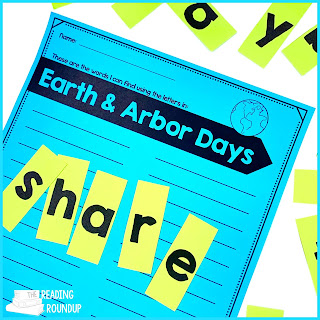
I modify Patricia Cunningham's approach and implement a more open ended activity. I provide students with the letters of various holiday and theme words. They then brainstorm all of the words they are able to make using those letters. It gives me an opportunity to see students' independent phonics and spelling skills, but I can also scaffold the learning for students when necessary.
 |
| For Halloween, we used black lights and highlighters to complete the activity! |
What are the benefits of using Making Words?
When students use this hands on approach, it makes their knowledge of how words work more concrete. This multi-sensory strategy is highly effective for struggling readers and students with Dyslexia to improve their phonological awareness. The open ended approach is naturally differentiated. Some students may only be able to change initial/ending sounds in CVC words while others may be able to add affixes to make more complex words.
Making Words is an extremely beneficial informal assessment. Teachers can quickly see which specific phonics skills students have mastered and those that require additional practice. Students may surprise you by either achieving more than you thought they could or struggling on skills you thought they knew. I've been surprised by 5th graders still missing short vowel sounds in CVC words or a struggling 2nd grade reader adding -ly to make the word sadly.

What are the steps for implementing this activity?
- Determine the final word you want to use.
- Provide students with all of the letters in the word you choose.
- Give students a recording sheet.
- Encourage students to manipulate the letters to see how many words they can make.
- Provide prompts to help students who may struggle coming up with words independently.
How does this fit into my Reading Workshop?
There are two options for implementation depending on the needs of your students. When introducing the activity and/or working with struggling readers, I recommend completing this within a small group. It allows the teacher to model and prompt students to help them find success. The small group format also makes informal observation and assessment easier.
Another option is to incorporate this activity into literacy centers, specifically Gail Boushey and Joan Moser's Daily 5 Word Work center. You may choose to print letters for individual students to use or larger letters for students to collaboratively manipulate using a pocket chart.

How do I organize the materials?
I have letters and recording sheets for holidays and themes already prepared that can be used throughout the entire year. They have each been printed on cardstock and laminated for reuse. You can also use the dry erase pocket sleeves to reuse the recording sheets. Each set of letters is stored in a small sandwich bag. The recording sheets and letter bags are kept in a small file box. By preparing it this way, I save paper and always have the activity ready. Plus I avoid fighting with the copy machine!

How do I support students with this skill?
You may need to model strategies to students to show them how to add/change letters to make new words. Here are some prompts you may need to provide to students:
- Change the first letter
- Change the vowel sound
- Add a silent e
- Add an ending (-s, -ing)
- Think of a word that rhymes with ____
- Think of sight words you know
- Add a digraph to the beginning/end of the word
- Add a blend to the beginning/end of the word
- Add a prefix
- Add a suffix
- Combine words to make a compound word
- Segment sounds and have students blend the sounds together to figure out the word
- Provide clues for words to make: A big yellow circle in the sky
Are you interested in using this engaging phonics activity with your students throughout the entire school year? Click to download the resource!
 |
| Download Here! |
Making Words is a highly effective strategy to reinforce phonics and spelling skills with your students. Have you tried this activity with your students? Let us know your experiences with this hands on strategy!
Want to save this for later?


 is a structure that provides scaffolded support to students when working with words. Students are lead through steps to create new words by adding or deleting phonemes, manipulating letters to make words, and ultimately using all of the provided letters to make a mystery word. For example: Take 2 letters to make at. Add a letter to make cat. In the picture above, instead of having students manipulate letter tiles I had them become the letters. This added a kinesthetic approach which helped make the phonics skills more concrete for them.