Image Map
Showing posts with label comprehension. Show all posts

A Simple Activity for Story Elements Practice

Are you looking for a fun way for students to practice retelling fictional texts? I have the PERFECT activity I use to work on story elements in an engaging way. Students play a dice game to answer various comprehension questions. Engaging and fun for students!

Are you looking for a fun way for students to practice retelling fictional texts? I have the PERFECT activity I use to work on story elements in an engaging way. Students play a dice game to answer various comprehension questions. Read on to find out how I use this activity with my students!

**This post contains affiliate links.**

What is Roll-a-Retell?

Roll-a-Retell is a dice game for comprehension practice. Students roll a dice and answer a question that corresponds to the number they rolled. They can answer the question orally or in a written response.
Are you looking for a fun way for students to practice retelling fictional texts? I have the PERFECT activity I use to work on story elements in an engaging way. Students play a dice game to answer various comprehension questions. Engaging and fun for students!

Setting up the Activity

Decide which comprehension skills you would like to focus on with the activity. Some suggested skills include: retelling, character analysis, story elements, making connections, and theme.

Create 6 questions stems for each skill you'd like to include. You can easily differentiate the activity by the skills and difficulty level of the questions you use. You may want to scaffold the questions and increase difficulty based on the number. (Think Bloom's Taxonomy). For example if you're working on characters, a #1 question could be "Who was the main character" while a #6 question could ask "Would you be friends with the main character? Why or Why not?" After students are familiar with the activity they can create their own questions!
Are you looking for a fun way for students to practice retelling fictional texts? I have the PERFECT activity I use to work on story elements in an engaging way. Students play a dice game to answer various comprehension questions. Engaging and fun for students!

Choose a way to display the questions to students. You may want to create a visual for your literacy centers or on a bookmark. Digital options could be showing it on your board or with a QR Code for students to access the questions.

Before implementing the activity, decide how you would like students to respond. If they're responding orally you will not need to prep anything. But if you opt for a written response you need to decide how that will look. Some options for recording their responses are: in their Readers Notebooks, on plain notebook paper, white boards, or a specific recording sheet. I prefer using a recording sheet so I can collect it. This allows me to informally assess their comprehension as well as holds them more accountable for their work. 
Are you looking for a fun way for students to practice retelling fictional texts? I have the PERFECT activity I use to work on story elements in an engaging way. Students play a dice game to answer various comprehension questions. Engaging and fun for students!

Ways to Implement the Activity

Guided Reading

This is my students' favorite activity to do during guided reading! After we finish reading a fiction story, we use a Roll-a-Retell game board to answer comprehension questions about the text. I select questions based on the skills that we are targeting within our group. It's a fun and easy way to informally assess students' comprehension of the text. Plus it's engaging and changes things up a bit for the students.

Literacy Centers

Students can work with a buddy to complete this activity during centers. They can each read an individual book or read a book together. After finishing the book(s), the students take turns rolling the dice. You may opt to have students orally respond to the questions or have them write down their answers. 
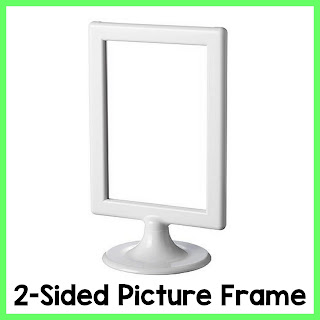
IKEA 2-Sided Picture Frames are perfect to use for Literacy Centers!
Click to purchase the frames!

**Tip for Centers Setup!**
I love using 2-sided frames for centers. It is easy to print off directions and keep at the table where students are completing the centers activity. For the Roll-a-Retell activity, I place the questions I want students to answer in the frame. Super simple way to keep things organized!

Independent Reading

Students can also complete this activity during independent reading. After they read a fiction book, they can answer comprehension questions about the story. This is the perfect opportunity for reading response in students' Readers Notebooks.
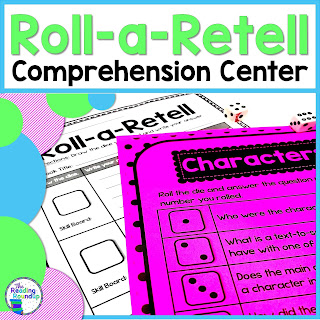
Are you looking for a fun way for students to practice retelling fictional texts? I have the PERFECT activity I use to work on story elements in an engaging way. Students play a dice game to answer various comprehension questions. Engaging and fun for students!
Click to download the boards I use!

Have you used the Roll-a-Retell activity with your students? Share your tips for implementing this or similar activities in the comments below!


Want to Pin This for Later?
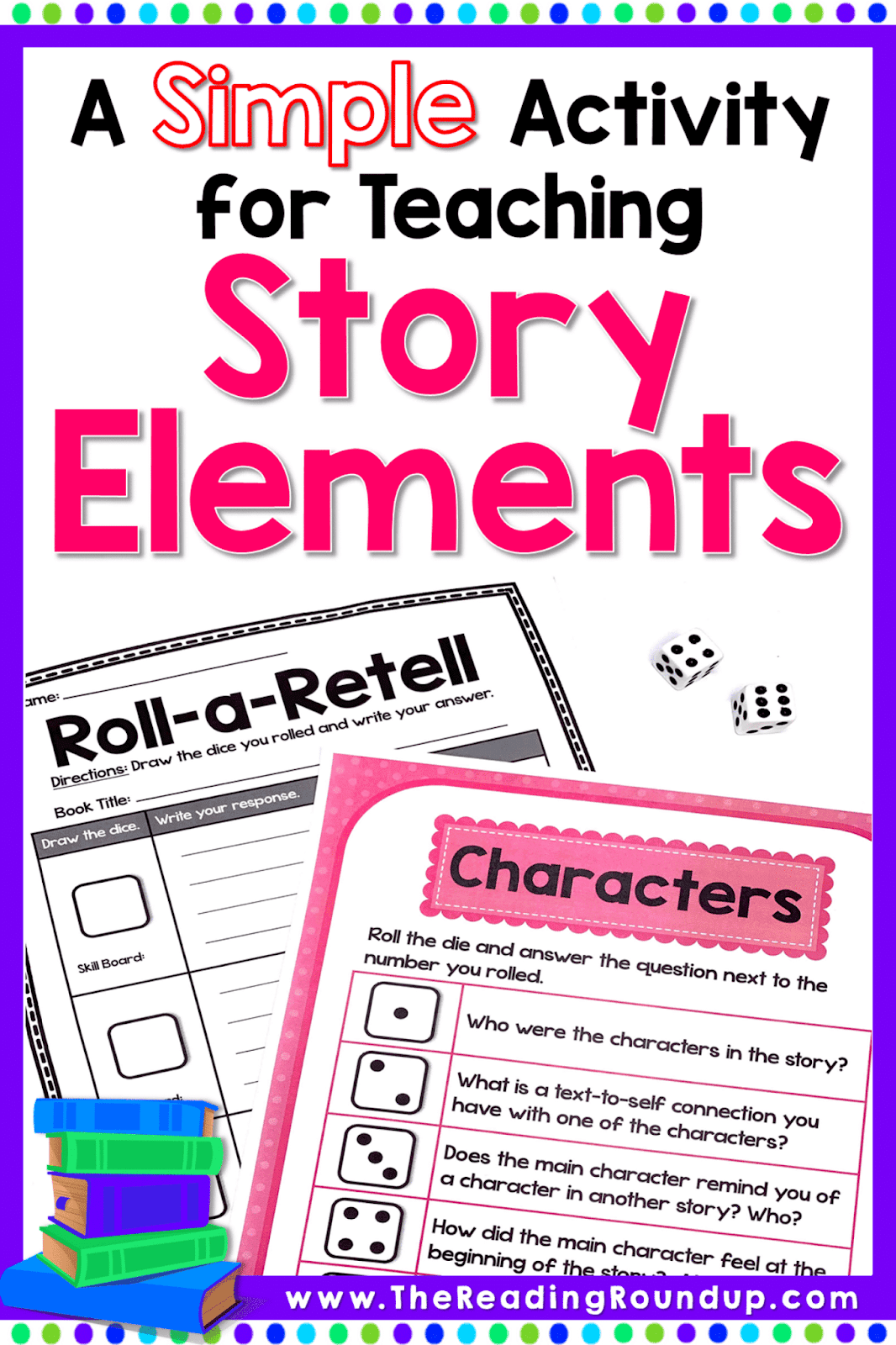
Are you looking for a fun way for students to practice retelling fictional texts? I have the PERFECT activity I use to work on story elements in an engaging way. Students play a dice game to answer various comprehension questions. Engaging and fun for students!

Gingerbread Man Literacy Unit & Stem Challenge

Gingerbread Man Literacy Unit with Stem Challenge by The Reading Roundup


When I started teaching, we planned everything by thematic units. Since then the words "rigor" and "Common Core Standards" have become more prevalent and thematic units seem to be a thing of the past. I missed the fun and creativity of thematic units, so I implemented a Gingerbread Man unit with my 3rd graders which was standards based. Continue reading to find out more!

(Post contains affiliate links)


The 3rd grade team was focusing on the skill of comparing and contrasting which naturally lent itself to a unit on the various versions of Gingerbread Man stories. I began by working with our school librarian to collect a large collection of Gingerbread stories. (Click to see a list of suggested Gingerbread books to use!)

retelling

Even though 3rd grade was working on comparing and contrasting during their LA block, the students in my remediation group were continuing to struggle with story elements and retelling. As a result, we first practiced this skill with individual books before working on the more advance skill of comparing books. 

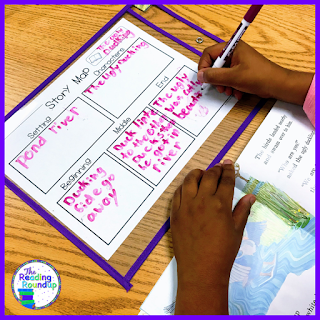
As I read various Gingerbread stories to the students, they each had a story map. They recorded the story elements and wrote the events from the beginning, middle, and end of the book. 

https://amzn.to/2BnniJ2
Click to purchase the dry erase pockets.
The students used a story map similar to the one in the picture above. I love placing story maps in the dry erase pockets to reuse the graphic organizers again and again. Students can use dry erase makers or post-it notes to allow for reuse.

gingerbread man book chart

After we read each Gingerbread book, we added it to a chart. We recorded the following story elements for each book: setting, characters, problem, and solution. You can create an anchor chart to keep track of the books, but I decided to document it digitally using Padlet. (Click here to learn more about using Padlet for your literacy instruction).


Gingerbread Man Literacy Unit with Stem Challenge by The Reading Roundup: Compare and Contrast Stories digitally with Padlet
The Padlet we created to compare the story elements in various Gingerbread books.

compare and contrast

After reading several Gingerbread books to the students, I allowed them to pick a book to read with a buddy that was at their independent reading level. We then worked to complete a venn diagram together to compare the two stories. Since we had done so much scaffolding and work together over the previous days it allowed the students to be successful with this skill.

Gingerbread Man Literacy Unit with Stem Challenge by The Reading Roundup: Venn Diagram to Compare and Contrast Gingerbread Stories

stem activity

For our culminating activity we read the book The Gingerbread Pirates which the students LOVE. As I read the book, we discussed the problems in the story. We chose two problems in the story: the captain needed to find his pirate crew and he also needed a ship. The students selected which problem they would like to solve and we made it into a stem activity! Our school purchased HUGE Imagination Playground Engineering Blocks with a grant, which is what we decided to use. But you can just as easily use wooden blocks, crafts sticks with tape, or play-doh to create a solution to the problem in the story. As you can imagine, this hands on literacy extension activity was a HUGE hit with the students! They keep asking when we can do this again! 

Gingerbread Man Literacy Unit with Stem Challenge by The Reading Roundup
Students built a solution to the problem in the story Gingerbread Pirates.


the value of thematic units

The students enjoyed all of the activities and kept asking me if we could do more. Not only that, they were able to master various literacy skills through this unit including: story elements, retelling, problem/solution, and compare/contrast. By completing a thematic unit such as this, we are able to teach students the standards in a more engaging and authentic manner!


Want to save this for later?
Let's make learning more engaging for students and bring back thematic units! In this Gingerbread Man literacy unit, we focus on the following skills: story elements, retelling, and compare/contrast. The culminating activity is a STEM challenge that students are sure to LOVE! The Reading Roundup

The One Tool You Need to make Reading Response Digital

Make Reading Response Digital with Padlet - The Reading Roundup

Are you looking to go paperless with your reading response notebooks? Padlet is an AMAZING digital tool that makes it engaging for readers to respond to text. 


What is Padlet?

Padlet is an free online bulletin board that allows multiple contributors to post ideas, images, links, videos, and more. Teachers can use the website or the app for students to access the Padlet boards they have created.

Using Padlet to Annotate Text

Make Reading Response Digital with Padlet - The Reading Roundup
When setting up the padlet, teachers can create columns that correspond with text annotations. I created Padlet boards for each book club book with the following columns: questions, important details, and interesting facts. Rather than annotating text using post-it notes, students can type their responses into the shared Padlet. 

Students can also comment on the ideas posted by other students! For example - one student asked a question about an unidentified character in the book. Another student responded in the comments with new details to help figure out that character's identity.


Using Padlet to Track Characters

Make Reading Response Digital with Padlet - The Reading Roundup
When reading chapter books, students can struggle to keep track of all of the characters. I created a Padlet that had columns for each of the main characters and a column for new characters. As students found additional information about each character or met a new character, they could add it to the Padlet. It was a visual way for students to easily remember what they knew about the characters.

Additional Benefits of Using Padlet for Reading Response

  • Students can easily collaborate with other students who are reading the same book. 
  • Students can immediately see new ideas on their device as other students contribute to the board.
  • Displaying the Padlet on the Smartboard leads to more student accountability and encourages them to take the activity seriously.
  • Students can respond to other students ideas in the comments. They can also like each other's comments - which adds a whole new element of excitement for them!
  • There is an option for students to add pictures, so they can take a picture of their evidence from the text. 
  • Teachers can customize the backgrounds of the Padlet boards. This is helpful when multiple books are being discussed at once. Different backgrounds make it easier to quickly distinguish which book is being discussed.
Make Reading Response Digital with Padlet - The Reading Roundup


Setting up Padlet for Reading Response

The following video provides step-by-step instructions for setting up Padlet boards for reading response.


These are only a few ways that I've used Padlet with my students, but there are limitless options for other ways to use it. How else could you use Padlet for reading response? Are there other digital tools you use for your students to response to text? Please share your ideas in the comments below!


Want to Pin This for Later?

Are you looking to go paperless with your reading response notebooks? Padlet is an AMAZING digital tool that makes it engaging for readers to respond to text and collaborate with others.

Reader's Theater is NOT Just for Fluency Practice

Reader's Theater is an extremely effective and engaging strategy for fluency practice. It allows students to practice reading fluently and expressively in an authentic manner. But did you realize you can also use it to work on vocabulary, comprehension, and writing skills? Read these 5 simple ways to use Reader's Theater for more than just fluency practice! #thereadingroundup #readerstheater #fluency

Reader's Theater is an extremely effective and popular strategy for fluency practice. Students get to practice reading fluently in an authentic manner. But there are so many other skills you can teach using Reader's Theater! 


5 Alternative Ways to use Reader's Theater

Read on to find 5 simple ways you can easily use Reader's Theater to enhance more than just students' reading fluency. By focusing on these additional skills, it improves students' overall reading ability which leads to a more expressive and fluent final performance of the Reader's Theater script!


Reader's Theater to Identify the Setting of a Story

Have your students look through the script to identify the parts of the story which refer to the setting. Reread those parts and write down the adjectives used to describe the setting. Discuss the word choice and determine where the story takes place. The students can then use Google images to find photos that best match the descriptions. This leads to rich discussions about which picture is best based on the evidence in the text! These photos can be added to a green screen app or simply displayed on your Smartboard behind students as they perform. 
Reader's Theater is an extremely effective and engaging strategy for fluency practice. It allows students to practice reading fluently and expressively in an authentic manner. But did you realize you can also use it to work on vocabulary, comprehension, and writing skills? Read these 5 simple ways to use Reader's Theater for more than just fluency practice! #thereadingroundup #readerstheater #fluency


Reader's Theater for Vocabulary Development

Students may be unfamiliar with some of the words in the Reader's Theater scripts. This is a perfect opportunity to practice using context clues to determine the meaning of those words. Students may also find words that are hard for them to pronounce. Rather than making them stumble over the words during their performance, you can help them use context clues to find synonyms that are easier for them to accurately read. You can replace any of these difficult words in the script by writing in the easier word directly on the script or on a post-it note covering the challenging word. This allows students to feel more confident about their ability to read the text fluently as they perform for their peers.

Reader's Theater to Teach Comprehension

Reader's Theater is a great opportunity for students to work on a variety of comprehension skills. Students may practice making inferences about the characters, settings, and events. Reader's Theater scripts are also ideal for working on moral and theme. The students tend to find it easier to identify the moral in these texts because they are more personally invested in the story. They take on the role of their character which naturally deepens their overall comprehension more than when independently reading a passage out of a text. 

Reader's Theater to Analyze Character Traits

Reader's Theater is the perfect tool to use for character analysis. Work with students to identify the character traits and have them provide text evidence to support their inferences. Help students make inferences about how their character must be feeling in the story. Encourage students to draw faces in the margins or on post-it notes to show how their character is feeling. It's a perfect visual reminder to add the appropriate expression when performing the script!
Reader's Theater is an extremely effective and engaging strategy for fluency practice. It allows students to practice reading fluently and expressively in an authentic manner. But did you realize you can also use it to work on vocabulary, comprehension, and writing skills? Read these 5 simple ways to use Reader's Theater for more than just fluency practice! #thereadingroundup #readerstheater #fluency

Reader's Theater for Writing Practice

There are many opportunities to use Reader's Theater for writing practice. Allow students to rewrite some of their lines or change the ending. In fact, you may even want to have your students write an entire script themselves! 


What are some other ways you've used Reader's Theater with your students? Please pin the following image and share your ideas in the Pin's comments! 


WANT TO PIN THIS FOR LATER?

Reader's Theater is an extremely effective and engaging strategy for fluency practice. It allows students to practice reading fluently and expressively in an authentic manner. But did you realize you can also use it to work on vocabulary, comprehension, and writing skills? Read these 5 simple ways to use Reader's Theater for more than just fluency practice! #thereadingroundup #readerstheater #fluency