Image Map
Showing posts with label phonics. Show all posts

Practice Making Words to Improve Students' Phonics Skills

Are you looking for an easy and engaging literacy center that you can use with your students all year? Making Words is the perfect activity to help improve students' phonics and spelling skills.

Are you looking for an easy and engaging literacy center that you can use with your students all year? Making Words is the perfect activity to help improve students' phonics skills. Keep reading for tips on implementing this strategy in your classroom!
**This post contains affiliate links.**
Are you looking for an easy and engaging literacy center that you can use with your students all year? Making Words is the perfect activity to help improve students' phonics skills.

What is the Making Words strategy?

Making Words is a hands on phonics activity that promotes students' phonological awareness and spelling skills. Students manipulate letter tiles to create words by blending the sounds together. They will need to change letters, add letters, and move letters around to spell new words. This multi-sensory approach deepens students' understanding of how words work.

Click to view book!

Patricia Cunningham offers the Making Words book that explicitly leads teachers and students through the activity. The teacher begins with the "secret word" in mind and then guides students to create smaller words using the letters in the secret word. The word difficulty gradually increases and the words build off of each other until the students eventually determine the secret word.

Some skills targeted by this activity:

  • Initial and ending sounds
  • Vowel sounds (long, short, silent e, digraphs)
  • Blends and Digraphs
  • Word families and rhyming words
  • Prefixes and Suffixes
  • Sight words

What is an alternative approach to this strategy?

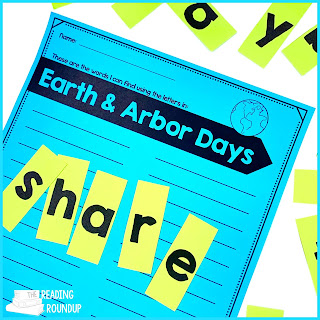
I modify Patricia Cunningham's approach and implement a more open ended activity. I provide students with the letters of various holiday and theme words. They then brainstorm all of the words they are able to make using those letters. It gives me an opportunity to see students' independent phonics and spelling skills, but I can also scaffold the learning for students when necessary.

Are you looking for an easy and engaging literacy center that you can use with your students all year? Making Words is the perfect activity to help improve students' phonics skills.
For Halloween, we used black lights and highlighters to complete the activity!


What are the benefits of using Making Words?

When students use this hands on approach, it makes their knowledge of how words work more concrete. This multi-sensory strategy is highly effective for struggling readers and students with Dyslexia to improve their phonological awareness. The open ended approach is naturally differentiated. Some students may only be able to change initial/ending sounds in CVC words while others may be able to add affixes to make more complex words. 

Making Words is an extremely beneficial informal assessment. Teachers can quickly see which specific phonics skills students have mastered and those that require additional practice. Students may surprise you by either achieving more than you thought they could or struggling on skills you thought they knew. I've been surprised by 5th graders still missing short vowel sounds in CVC words or a struggling 2nd grade reader adding -ly to make the word sadly

Are you looking for an easy and engaging literacy center that you can use with your students all year? Making Words is the perfect activity to help improve students' phonics skills.


What are the steps for implementing this activity?

  1. Determine the final word you want to use.
  2. Provide students with all of the letters in the word you choose.
  3. Give students a recording sheet.
  4. Encourage students to manipulate the letters to see how many words they can make.
  5. Provide prompts to help students who may struggle coming up with words independently.

How does this fit into my Reading Workshop?

There are two options for implementation depending on the needs of your students. When introducing the activity and/or working with struggling readers, I recommend completing this within a small group. It allows the teacher to model and prompt students to help them find success. The small group format also makes informal observation and assessment easier.

Another option is to incorporate this activity into literacy centers, specifically Gail Boushey and Joan Moser's Daily 5 Word Work center. You may choose to print letters for individual students to use or larger letters for students to collaboratively manipulate using a pocket chart.


How do I organize the materials?

I have letters and recording sheets for holidays and themes already prepared that can be used throughout the entire year. They have each been printed on cardstock and laminated for reuse. You can also use the dry erase pocket sleeves to reuse the recording sheets. Each set of letters is stored in a small sandwich bag. The recording sheets and letter bags are kept in a small file box. By preparing it this way, I save paper and always have the activity ready. Plus I avoid fighting with the copy machine!

Are you looking for an easy and engaging literacy center that you can use with your students all year? Making Words is the perfect activity to help improve students' phonics skills.

How do I support students with this skill?

You may need to model strategies to students to show them how to add/change letters to make new words. Here are some prompts you may need to provide to students:
  • Change the first letter 
  • Change the vowel sound 
  • Add a silent e 
  • Add an ending (-s, -ing) 
  • Think of a word that rhymes with ____
  • Think of sight words you know
  • Add a digraph to the beginning/end of the word
  • Add a blend to the beginning/end of the word
  • Add a prefix
  • Add a suffix 
  • Combine words to make a compound word
  • Segment sounds and have students blend the sounds together to figure out the word 
  • Provide clues for words to make: A big yellow circle in the sky 

Are you interested in using this engaging phonics activity with your students throughout the entire school year? Click to download the resource!
Are you looking for an easy and engaging literacy center that you can use with your students all year? Making Words is the perfect activity to help improve students' phonics skills.
Download Here!

Making Words is a highly effective strategy to reinforce phonics and spelling skills with your students. Have you tried this activity with your students? Let us know your experiences with this hands on strategy!


Want to save this for later?

Are you looking for an easy and engaging literacy center that you can use with your students all year? Making Words is the perfect activity to help improve students' phonics and spelling skills.


Successful Tips for Using the Beanie Baby Decoding Strategies

The Reading Roundup - Beanie Baby Reading Strategies Tips

The Beanie Baby Reading Strategies have made a tremendous impact on my students' ability to successfully decode unknown words independently. If you didn't see Part 1 of my post in which I introduce the strategies, check it out here.


Since I have found these strategies to be highly effective with my students, I want to share my tips with you to hopefully help your students find the same success!


The Reading Roundup - Beanie Baby Reading Strategies Posters
The Reading Roundup - Beanie Baby Reading Strategies Tips

Steps for Introducing the Beanie Baby Reading Strategies
With all of the strategies, I use the following steps to introduce and practice the strategy.
1.     Model the strategy on a shared book or in the guided reading book for your lesson.
2.     Display the corresponding poster to use as a reference. (See picture above)
3.     Practice the strategy together.
4.     Encourage students to try it on their own while they read the guided reading book.
5.     Place the Beanie Babies on the guided reading table as the students read independently as a reminder of the strategies. (See picture above)
6.     Prompt students when they get stuck on a word to practice identifying which strategy they think would help. Support students as they attempt to use the strategy. Make sure they physically grab the Beanie Baby that they want to try using because it helps them take ownership of the strategy.
7.     After the students have finished reading the book, highlight the students who used the decoding strategies. Explain to the group how the student used the strategy to successfully decode the unknown word. Eventually through enough modeling, the students will be able to explain it themselves. I also like to hand students the Beanie Babies that represent the strategies they used. It is a tactile reminder of the strategies, but it also acts as a reward for students as they get excited to hold the Beanie Babies.


The Reading Roundup - Beanie Baby Reading Strategies Tips

Other Helpful Tips for Implementation
  • I sent out emails to my parents asking if they had any of the Beanie Babies at home. Luckily, I was able to get all of them that way! You may also want to check out Amazon, Ebay, or thrift stores to find yours. Having the actual Beanie Babies is a key factor to their effectiveness.
  • The key is having a tool for the students to physically manipulate when they are stuck on a word. Even if you can't find the actual Beanie Babies, I strongly recommend having something to represent each strategy. (Another option are the strategy sticks as show above).This adds a hands on approach that helps students take more ownership of the strategy, thus enabling them to independently implement the strategy. 
  • Once I've began introducing the strategies, I begin each guided reading lesson with a quick review. I ask the students to tell me what they are going to do if they get stuck on a word. They must tell me the strategy and not just the name of the Beanie Baby. Once they've identified a strategy, I toss them the corresponding Beanie Baby. This simple warm up activity gets them excited to read and helps build their confidence that they will be able to figure out any unknown words they encounter.
  • It is important to constantly have students verbalize the strategies to youThey must tell you the decoding strategy and NOT just the name of the Beanie Baby. For example - they should say "I can stretch out the word" and not "Stretchy Snake." When they get stuck on a word, ask them to explain what they can try. If a student has successfully implemented the strategies to decode an unknown word, ask him/her to explain what they did. By having them orally explain the strategy to you, they begin to internalize it more. 
  • The Beanie Babies are just a scaffold. Once my students can verbally explain to me the strategies and independently implement them, I no longer use the actual Beanie Babies. The posters remain up all year for students to refer to, but as a result of our extensive work practicing the strategies at the beginning of the year they rarely need to refer to the posters. 


Make sure you check out Part 1 of this post to get a more in depth introduction to all of the Beanie Baby Decoding Strategies! Click here to read Part 1!


Want to Pin this for Later?

The Reading Roundup - Beanie Baby Reading Strategies Tips

The Secret to Teaching Students How to Decode

The Reading Roundup - Decoding Secret Title
If I had to name the one teaching strategy that has been the most effective in helping my students with decoding, it would be the Beanie Baby Reading Strategies! Hands down - without question! Because of these strategies, my students are able to verbally explain what to do when they're stuck on a word and independently make attempts at decoding unknown words.

Maybe you're already familiar with the Beanie Baby Reading Strategies or maybe you have no idea what I'm talking about. But hopefully by my sharing what has worked for me, you'll find some new ideas to try in your guided reading lessons.

The Beanie Baby Reading Strategies for Decoding

Before I tell you how I use the Beanie Baby decoding strategies, let me first introduce you to our friends! 

Here's a snapshot of our 9 Beanie Baby Decoding Strategies:
The Reading Roundup - Decoding Secret - Beanie Baby Reading Strategies


Introducing the Beanie Baby Reading Strategies to Students

I introduce one strategy at a time to provide students with ample opportunities to practice and remember the strategy. With Kindergarten and 1st grade, I typically introduce one strategy a week. This depends on their ability to start implementing the strategy independently. A strategy such as Eagle Eye, typically does not require as much practice. With 2nd graders, I'm able to introduce a couple strategies a week as it is just a review for them.


he Reading Roundup - Decoding Secret - Beanie Baby Reading Strategies - Eagle Eye
I always introduce Eagle Eye first. I explain to the students that he helps us by looking at the picture. We can use the clues in the picture to figure out the unknown word. He is the easiest one to start with since students naturally tend to look at the picture first anyway. 


he Reading Roundup - Decoding Secret - Beanie Baby Reading Strategies - Lips the Fish
Lips the Fish is the second strategy I introduce as it is also relatively easy for students to begin implementing. Lips the Fish gets his lips ready for the first sound of the word. We practice by covering up the endings of words to use the inital sounds to figure out what the word might be. I also refer back to Eagle Eye if they aren't able to decode the word with just the initial sound. This keeps the previously taught strategy fresh in their mind, but also shows them how the strategies can work together to help us.


The Reading Roundup - Decoding Secret - Beanie Baby Reading Strategies - Stretchy Snake
Stretchy Snake is one of their favorite strategies! He stretches out the word and helps them sound it out. We practice by stretching out the snake Beanie Baby as we sound out CVC words. I also provide each student with a slinky to practice sounding out the word. Adding this hands on element helps the students internalize the strategy. It is important to remind the students that they must put the sounds together after stretching it out to determine the word (Say C-A-T: cat).


The Reading Roundup - Decoding Secret - Beanie Baby Reading Strategies - Meaning Bird
I always teach Meaning Bird next. In the past, I found that some students would overly depend on Stretchy Snake. They would sound out words but when they put the sounds together it did not make sense. As a result, I created Meaning Bird who reminds us to think about what word would make sense. 


The Reading Roundup - Decoding Secret - Beanie Baby Reading Strategies - Chunky Monkey
Chunky Monkey is another student favorite! She helps looks for known "chunks" in the words. This can be smaller words within larger words (an is in can), blends/digraphs (sh is at the end of fish), or endings (-s, -ing, -ed). The students will quickly notice that these chunks don't always help them decode the unknown word. (Example: They may notice so and me in some but that does not help them read the word). These words are a great opportunity to teach students how the strategies can work together as well as remind them to think about what word would make sense. (The book There's an Ant in Anthony is a great tool to help with this skill). affiliate link


The Reading Roundup - Decoding Secret - Beanie Baby Reading Strategies - Skippy the FrogThe Reading Roundup - Decoding Secret - Beanie Baby Reading Strategies - Tryin' Lion
I typically teach Skippy the Frog and Tryin' Lion together. Skippy the Frog skips an unknown word, while Tryin' Lion encourages students to reread and try a word that makes sense and looks right. I tell students that these are buddies that like to work together. We talk about how we can't skip a word forever because then our story will not make sense. They must go back to reread and try a word that would make sense.


The Reading Roundup - Decoding Secret - Beanie Baby Reading Strategies - Flippy the Dolphin
Flippy the Dolphin is the last Beanie Baby I introduce as it requires students to have a knowledge of short and long vowel sounds. Flippy the Dolphin flips the vowel sound. If the word is "pot" we would sound it out with the short vowel sound p-o-t and the long vowel sound p-o-t-e. Then we talk about which word would make sense in the sentence. When we flip the vowel sound, we literally flip the dolphin Beanie Baby as the hands on approach makes it more concrete to the students.


The Reading Roundup - Decoding Secret - Beanie Baby Reading Strategies - Helpful Kangaroo
The final Beanie Baby Strategy is Helpful Kangaroo, which teaches students to ask for help. I honestly never introduce this strategy to my students because I want them to independently implement the other strategies and not rely on me to help them with the word.

The Reading Roundup - Decoding Secret - Beanie Baby Reading Strategies Bulletin Board

As I introduce the strategies, I display the posters for students to refer to during guided reading.
The Reading Roundup - Beanie Baby Reading Strategies Posters

Want to know more tips and tricks to successfully use the Beanie Baby Reading Strategies to teach your students how to independently decode unknown words? Check out Part 2 of my Post!


Want to Pin this for later?

The Reading Roundup - Decoding Secret - Beanie Baby Reading Strategies


Simple Multisensory Phonics Strategies

Reluctant readers and students with dyslexia can greatly benefit from multisensory phonics activities. Check out these simple strategies you can easily implement with your students!

Dyslexia has been a hot topic in education lately. In fact, Virginia is now requiring teachers to complete dyslexia training when applying for licensure in order to make sure educators know how to meet these students' needs. Hearing the word dyslexia can make some teachers nervous, but what they need to remember is that they are already implementing these strategies daily! Multisensory learning is beneficial for students with dyslexia to help activate multiple areas of the brain which helps these students make the necessary phonetic connections when working with words.

In order to reassure you that you DO already know how to help students with dyslexia, here are some simple multisensory phonics activities that are beneficial for these students that you're most likely already implementing!

**Post contains Amazon Affiliate links.

Reluctant readers and students with dyslexia can greatly benefit from multisensory phonics activities. Check out these simple strategies you can easily implement with your students!

What can I use?
These are just a few suggestions. Be creative with other tools you can use!
  • Shaving Cream
  • Magnetic Letters
  • Sidewalk Chalk
  • Songs & Dances (link to an example of songs I use with my students)
  • Gel Sensory Bags
  • Play-Doh
  • Sand / Sugar / Salt
  • Air Writing
  • Sandpaper Letters
  • Pipe Cleaners / Wiki Sticks

What strategies should I try with these tools?
Here are a few suggested strategies you can implement with the tools mentioned above. The important thing is to make sure the students are verbalizing the sounds as they manipulate/write with the tools. This helps activate the different parts of the brain to strengthen the connections for the students.
  • Practice writing letters
  • Sight words writing practice
  • Making word families
  • Decoding unknown words
  • Making Words

More about Making Words

Reluctant readers and students with dyslexia can greatly benefit from multisensory phonics activities. Check out these simple strategies you can easily implement with your students!

Patricia Cunningham's Making Wordsis a structure that provides scaffolded support to students when working with words. Students are lead through steps to create new words by adding or deleting phonemes, manipulating letters to make words, and ultimately using all of the provided letters to make a mystery word. For example: Take 2 letters to make at. Add a letter to make cat. In the picture above, instead of having students manipulate letter tiles I had them become the letters. This added a kinesthetic approach which helped make the phonics skills more concrete for them.

Most likely you are already using many of these multisensory strategies or just needed a quick reminder about them. But what about your students' parents? I made a video series to explain and model various multisensory learning strategies. It is beneficial for parents and new teachers to view these strategies in action. Below is an example of one of these videos but a link is also provided to access the entire playlist. 


What other multisensory learning strategies do you use with your students? Which ones to you find to be the most effective? Comment below with the strategies you use!


Want to Pin this for later?

Reluctant readers and students with dyslexia can greatly benefit from multisensory phonics activities. Check out these simple strategies you can easily implement with your students!

Learning Vowel Sounds Through Song & Dance

Help your students learn the vowel sounds by using songs and dances! Gets them moving and learning in a fun way!


I am so excited to share these vowel songs from Have Fun Teaching with you!  My primary students LOVE doing these dances!  The videos are a great way to distinguish between the long and short vowel sounds.  I use the SRA reading program with some groups, so the videos are especially helpful since they include the symbols to identify long or short vowels (ă or ā). The videos also give sample words for each vowel sound and prompt students to practice writing the letters.  So much instruction within these short videos!


Help your students learn the vowel sounds by using songs and dances! Gets them moving and learning in a fun way!  


Help your students learn the vowel sounds by using songs and dances! Gets them moving and learning in a fun way!


The BEST part of the videos is that they encourage students to get up and MoViNg!! That is especially important for the struggling readers who have short attention spans and need the kinesthetic aspect to help them retain the content. We add motions to correspond with each word.  We also throw our hands in the air from side to side for the long vowel sounds (think of the motions for "Hey... Oh..").  For the short vowel we do short up and down arm motions.  


Here are the vowel videos that you can use with your students:


I hope that your students enjoy these videos as much as mine! Do you have any other fun dances you do to practice vowel sounds?

want to pin this for later?

Help your students learn the vowel sounds by using songs and dances! Gets them moving and learning in a fun way!